 English
Copart title types: salvage, rebuilt, clean and parts only explained
Copart title types explained: clean, salvage, rebuilt, certificate of destruction, parts only and bill of sale, what each allows, export notes and red flags.
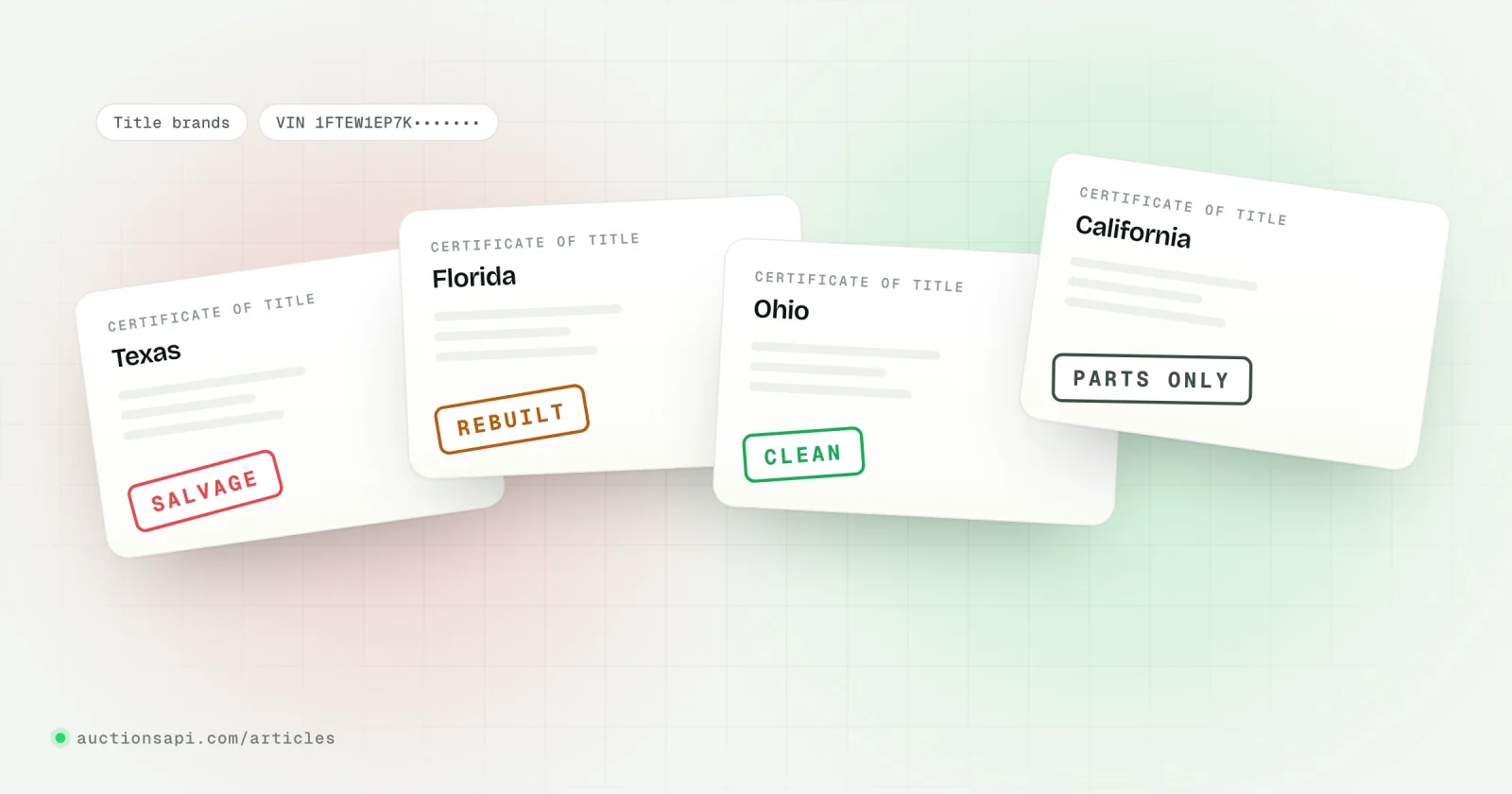
Copart title types tell you which ownership document comes with the car, and that document decides what you can legally do with it. A clean (clear) title can be registered as it is; a salvage title needs repairs and a state inspection before the car goes back on the road; a certificate of destruction, non-repairable or parts-only document means the issuing state never wants the car titled for road use again.
The confusing part is that there is no single national list. Each state writes its own documents, so the same kind of paper shows up as “Salvage Certificate”, “Cert of Title–Salvage” or a form number such as New York's MV-907A. Copart prints the issuing state next to the document name; IAAI does the same in its title or sale document line.
Below we group the names you will actually meet into a handful of families, show what each one allows (registration in the US, export, parts only), and list the patterns in the title line that make us look twice at a lot.
Key takeaways
- The title line is the most important line on a salvage auction listing: it decides registration and export, not the damage label.
- Clean, salvage, rebuilt and non-repairable are families; every state names them differently and some states have several variants.
- Certificate of destruction, non-repairable, junk and parts-only lots are generally meant for dismantling and are a poor choice if you plan to register the car.
- A title that gets cleaner between two sales of the same VIN is a warning sign, not good news.
- Brand rules, thresholds and inspection steps vary by state and change over time, so confirm the specific document with the issuing state's DMV before you rely on it.
What the title type on a Copart or IAAI listing means
The title line describes the document the seller will transfer to the buyer: which state issued it and which brand, if any, is printed on it. A brand is a permanent note on the title record, such as salvage, rebuilt, flood or non-repairable. Once a state has branded a VIN, the brand is supposed to follow the car into every later title, in any state.
The auction does not decide the brand. In most cases the seller is an insurance company that paid out a total-loss claim, took ownership of the car and applied to the state for the document that its rules require. Copart and IAAI then sell the car with that document, or with the promise of it when the paperwork is still being processed.
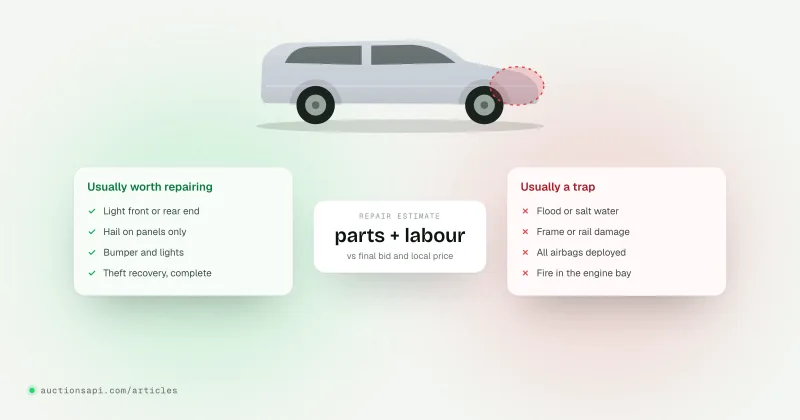
Two things follow from this. First, the title type tells you about the car's legal status, not its physical state: a hail car with a salvage title can be in better shape than a clean-title car with a bent frame. Second, the title type depends on the state that wrote it, so you have to read the state code too, not only the word after it.
Copart title types by family: what each one allows
Most of the document names you will see on Copart and IAAI fall into the families below. The registration and export columns describe the usual situation; the exact rules belong to the issuing state, US Customs and the destination country.
| Title type (family) | What it means | Can it be registered in the US? | Export notes (check current rules) |
|---|---|---|---|
| Clean / clear title | No brand on record. Often a dealer trade-in, rental, bank repossession or a theft recovery returned before a total-loss payout. | Yes, as it is. | The standard case: CBP accepts the original title. |
| Salvage title / salvage certificate | Declared a total loss, usually by an insurer. Not road-legal in its current form. | Only after repairs, a state inspection and a new rebuilt title. | Commonly exported: CBP lists a salvage title as proof of ownership. Registration abroad follows the destination country's rules. |
| Rebuilt / reconstructed / restored salvage | Was salvage, was repaired and passed the state inspection. | Yes, with the brand kept for good. | Exported like a clean title; resale value stays lower. |
| Certificate of destruction / non-repairable | The state says the car may only be dismantled or scrapped. | No, not in the issuing state, and usually not elsewhere. | Some go abroad as parts or scrap; check that the destination will register it before buying it as a car. |
| Junk / junk receipt | Surrendered as junk; similar effect to non-repairable in many states. | Generally no. | CBP accepts a junk or scrap certificate as an ownership document, but that does not make the car registrable abroad. |
| Parts only / dismantle only | Sold for parts, often with a non-repairable document or none. | No. | Treat it as a parts purchase. |
| Bill of sale (no title) | No title is transferred, only a sale document. Typical for older cars in states that stop titling them, for trailers or for some equipment. | Depends on the state and the vehicle's age; often difficult. | CBP wants a title for titled vehicles; without one you must show the state requires none. Ask your exporter first. |
| Flood / water damage brand | A flood brand added by the state, sometimes together with salvage. | Depends on the brand combination and the state. | Usually exported like salvage; buyers abroad value it lower. |
| Lemon / manufacturer buyback | Bought back by the maker under a state lemon law. | Yes, with disclosure. | Exported like clean; check the repair history. |
| Odometer brand (not actual, exceeds limits) | The mileage on the title is known to be wrong or rolled over. | Yes, the brand stays. | See the odometer guide; value depends on the real mileage. |
Salvage vs rebuilt vs clean: the three you will see most
Salvage
A car becomes salvage when it is declared a total loss. Who declares it and at what point depends on the state. Some states use a percentage threshold (repair cost against the car's value before the accident), with thresholds ranging from about half of the value to the full value; others use a total loss formula that adds the expected salvage value to the repair cost. In many states, an insurer that settles a claim as a total loss and takes the car must apply for a salvage document even if the damage is below the percentage.
A worked example: a 2019 Camry with front-end damage, a repair estimate of $9,000 and a pre-accident value of $14,000. That is about 64%. In a state with a 75% threshold the insurer may still pay it out as a total loss because airbags, rental days and hidden damage push the real cost higher. Once it does, the car reaches Copart with a salvage certificate.
Rebuilt (reconstructed, restored, prior salvage)
A rebuilt title is what a salvage car gets after it is repaired and passes the state's inspection. The steps are similar in most states: repair, keep the receipts for every major part (states check that parts are not stolen), take photos before and after, book the inspection, and apply for the new title. The name varies; you will see rebuilt, reconstructed, restored salvage or prior salvage. The brand never comes off.
Clean (clear)
Copart calls it clear or clean depending on the state document. On a salvage auction, a clean title plus a run-and-drive condition is the most expensive combination, because it is the only one a US buyer can register the next day. For export, clean versus salvage often matters less than you would expect: the destination registers the car under its own rules and the price gap is mostly about the damage, not the paper.
State differences: the same car, different paper
Because each state writes its own documents, two identical cars totalled in two states can arrive at auction with very different titles. A few patterns you will meet often:
- California issues a salvage certificate for repairable total losses and a separate non-repairable or junk document for cars that may only be dismantled.
- New York's salvage certificate appears under its form number, MV-907A, which confuses buyers who search for the word salvage.
- Florida issues a certificate of destruction for vehicles that may only be used for parts or scrap, alongside its ordinary salvage title.
- Texas separates a salvage vehicle title (can be rebuilt) from a nonrepairable vehicle title (cannot).
- Several states stop titling vehicles past a certain age, so older cars and trailers can sell on a bill of sale with the old registration as proof of ownership.
Lots are also moved between yards. A car titled in Ohio can sell from a yard in Pennsylvania; the title state, not the yard state, decides the rules of the document. When the two differ, check that the paperwork is in hand and not still being transferred.
The national safety net against “title washing” (moving a branded car to a state with weaker rules to get a cleaner title) is NMVTIS, the National Motor Vehicle Title Information System. Insurers, salvage auctions and junk yards report total-loss vehicles to it, and approved providers sell the reports; the official consumer site is vehiclehistory.gov.
Which Copart title types can be registered or exported
For a US buyer the question is simple: clean and rebuilt titles register, salvage titles register after a rebuild, and destruction, non-repairable, junk and parts-only documents do not. Exporters face two separate checks: getting the car out of the US and getting it registered at the destination.
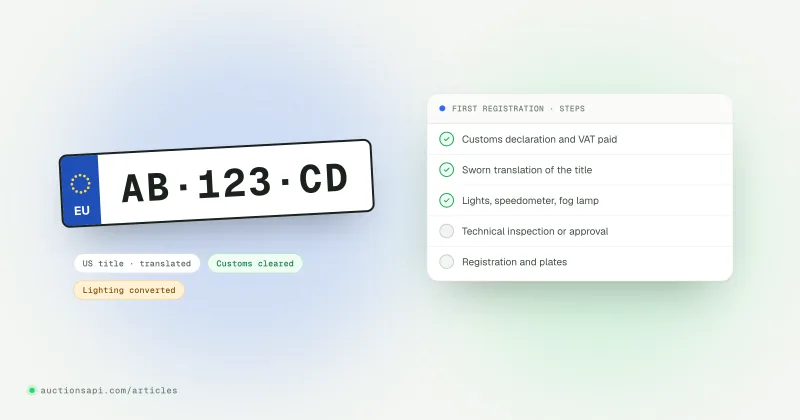
To leave the US, US Customs and Border Protection wants the VIN and proof of ownership at least 72 hours before export. For a US-titled car that means the original certificate of title or salvage title plus copies; for an untitled vehicle there are separate options (a junk or scrap certificate, or proof that the state requires no title). A lien or a lease needs written permission from the lienholder. Your shipping agent files this, but the document you buy at auction is what they will file.
At the destination, the US brand is only part of the picture. Many countries register an imported car after their own technical inspection and care more about the damage and the VIN than about the word salvage. Others refuse cars that the US declared non-repairable or destroyed. This changes, so ask your broker or the registration authority before you buy anything below a salvage title.
In practice, most exporters treat salvage-certificate cars as the normal export product and avoid certificates of destruction and parts-only lots unless the car is bought for parts. The full paperwork chain is in our guide to importing a car from a US auction.
Red flags in the title line
- The title gets cleaner between two sales of the same VIN: salvage in one sale, clean in a later one. Check the lot history before anything else (see auction history by VIN).
- A late-model car sold on a bill of sale. Newer vehicles are titled in every state, so a missing title needs an explanation.
- A note that the title will follow later, or that the document is from another state than the seller. Paper can take weeks; budget storage and plan the shipment around it.
- A clean title on a car with deployed airbags and heavy structural damage. It can be legitimate (a non-insurance seller), but it also means nobody has branded it yet.
- Certificate of destruction or non-repairable on a car advertised to you, after the auction, as “rebuildable”.
- An odometer brand on the title next to a low reading on the dash. Read the odometer guide before trusting the miles.
How title types appear in auction data
If you build a catalog or check many lots, read the title as data rather than from screenshots. In AuctionsAPI records each lot carries a title and a detailed_title, both objects with id, code and name. The full list of names comes from the titles dictionary, which is where a filter dropdown should get its values.
To list salvage lots, the /cars endpoint accepts document_title, a case-insensitive substring of a title name. One detail matters: if the text matches nothing in the dictionary, the filter is silently not applied and you get every lot. Validate the value against the dictionary first.
Keep the state-specific name as you receive it and add your own family column (clean, salvage, rebuilt, non-repairable, parts, bill of sale) on top. Visitors filter by family; the original name is what they need on the vehicle page.
What to check before you commit to a lot
- Read the state code and the document name together, and look the document up on that state's DMV site if you have not seen it before.
- Decide if you need a car you can register or parts. Anything below salvage is for parts unless your destination confirms otherwise.
- Pull the history of the VIN across earlier sales and compare the title each time.
- For export, confirm with your shipping agent that the document is acceptable to CBP and that it is physically available, not pending.
- Ask your broker how the destination country treats that specific brand.
If you run a site or a tool that needs title types for many lots, the Copart and IAAI API returns the title, the detailed title and the damage for every lot, live and sold.
Questions people ask
What does salvage title mean at Copart?
It means the car was declared a total loss, usually by an insurer, and the state issued a salvage document. The car cannot be driven or registered as it is. In the US it can return to the road after repairs, a state inspection and a new rebuilt title; the salvage brand stays on its record for good. The exact process depends on the state.
Can you register a car with a certificate of destruction?
Generally no. A certificate of destruction, like a non-repairable or junk document, means the issuing state allows the vehicle only to be dismantled or scrapped. Some of these cars are exported for parts, and a few countries may still register them under their own rules, but you should confirm that with the destination authority before treating such a lot as a car.
Is a clean title at Copart better than a salvage title?
For a US buyer who wants to register the car quickly, yes. For condition, not necessarily: clean only means no brand is recorded, and damaged clean-title cars are common at salvage auctions. For export the paper often matters less than the damage, because many destinations inspect and register the car under their own rules.
What is the difference between salvage and rebuilt title?
Salvage describes a total-loss car before it is fixed and inspected; it is not road-legal. Rebuilt (also called reconstructed or restored salvage) is the title the state issues after the repairs pass inspection, so the car can be registered and driven. Both are permanent brands, and rebuilt cars usually sell for noticeably less than clean ones.
Can a bill of sale car from Copart be exported?
Sometimes, but it is harder. US Customs expects the original title for a titled vehicle; without one, the exporter must show the state does not require a title for that vehicle and prove ownership in another way. Bill of sale lots are usually older cars, trailers or equipment. Ask your exporter before buying one for shipment.