 English
Articles
Field notes on car auction and marketplace data: Copart and IAAI lots, sold prices, VINs, imports from the US and Korea, Chinese listings, and how to build on all of it.
 For developers
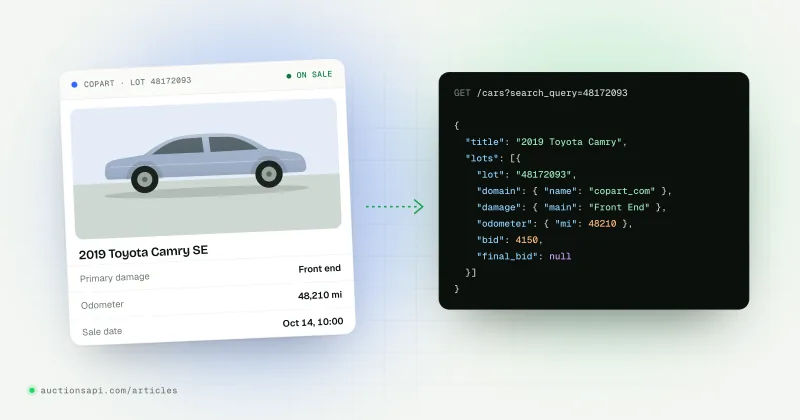
Copart API: what data you can get and how to get it
Copart has no open data API for third parties. Here is what Copart data you can get, the realistic options, and what requests and records look like.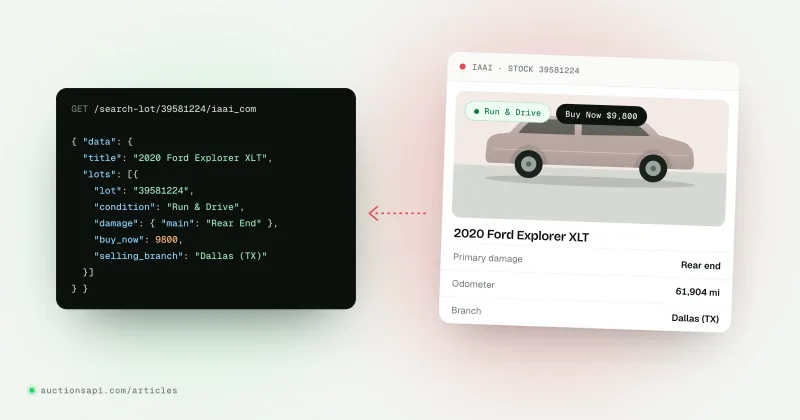 For developers
IAAI API: getting Insurance Auto Auctions data into your app
IAAI has its own vocabulary: stock numbers, item IDs, branches, start codes, timed auctions. How each maps to API fields, with requests and a full record.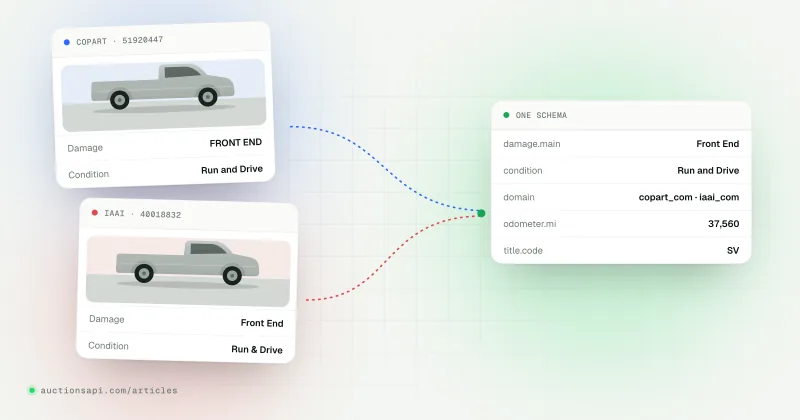 Copart & IAAI
Copart vs IAAI: the differences that matter to buyers and to your data
Two salvage auctions, two vocabularies. How Copart and IAAI differ for buyers (formats, fees, labels) and for developers who merge both into one dataset.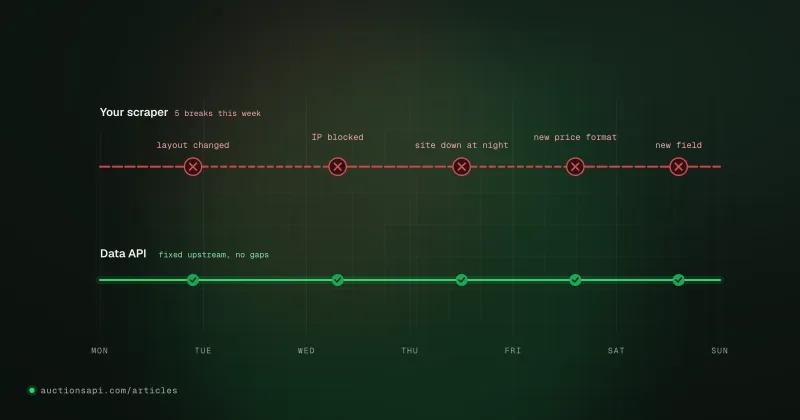 For developers
Copart scraper or API: what scraping Copart really costs
A Copart scraper takes a day to write and years to keep alive. What it needs, where it breaks, how its cost is built, and when building one is still the right call.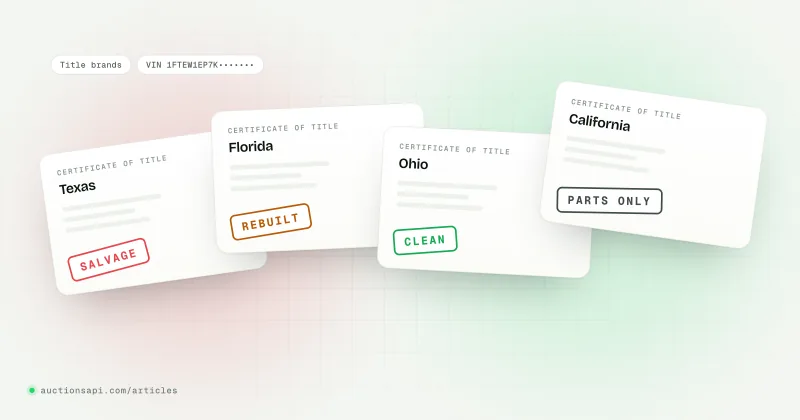 Copart & IAAI
Copart title types: salvage, rebuilt, clean and parts only explained
What clean, salvage, rebuilt, certificate of destruction, parts only and bill of sale mean on Copart and IAAI lots, what can be registered or exported, and the red flags.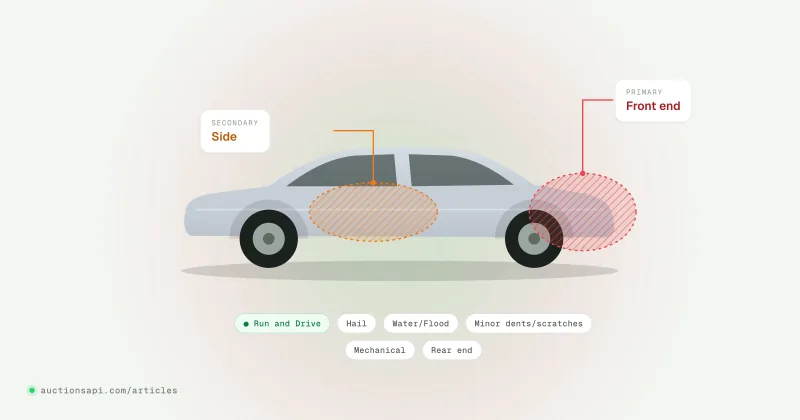 Copart & IAAI
Copart and IAAI damage types: primary, secondary and what labels hide
What every common Copart and IAAI damage label means, primary vs secondary damage, how Run and Drive differs from Starts, and what to check in the photos.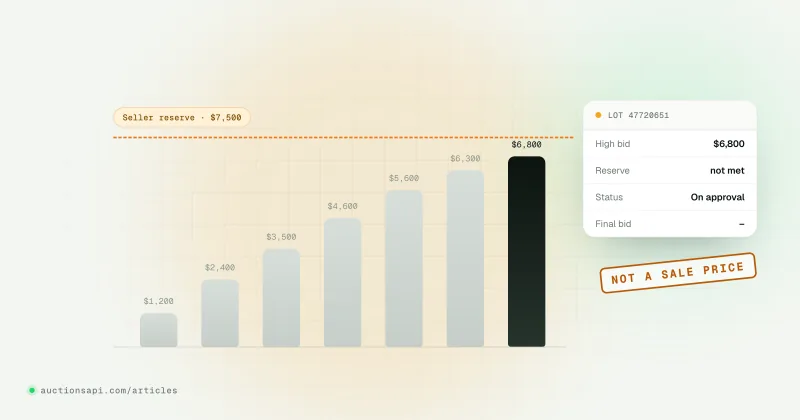 Copart & IAAI
Copart seller reserve: what it means and why it isn't the sale price
Pure Sale, Minimum Bid and On Approval explained, what happens when bidding stops below the reserve, and why a seller reserve must never be shown as a sale price.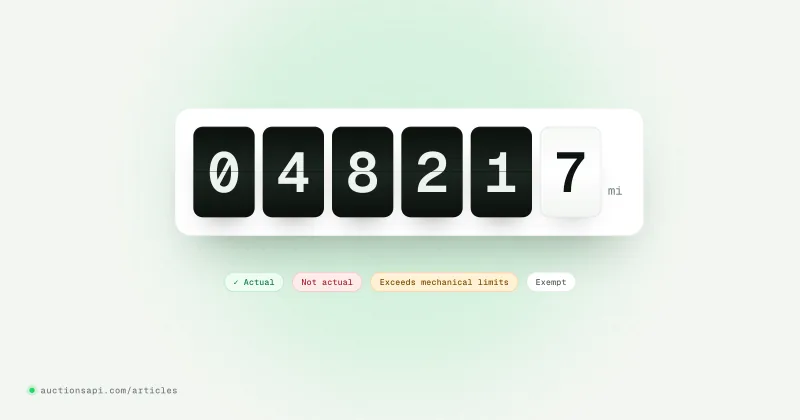 VIN & history
Odometer at auction: actual, not actual, exceeds limits, exempt
What actual, not actual, exceeds mechanical limits and exempt mean on Copart and IAAI lots, the federal 20-year disclosure rule, and how to spot a rollback across sales.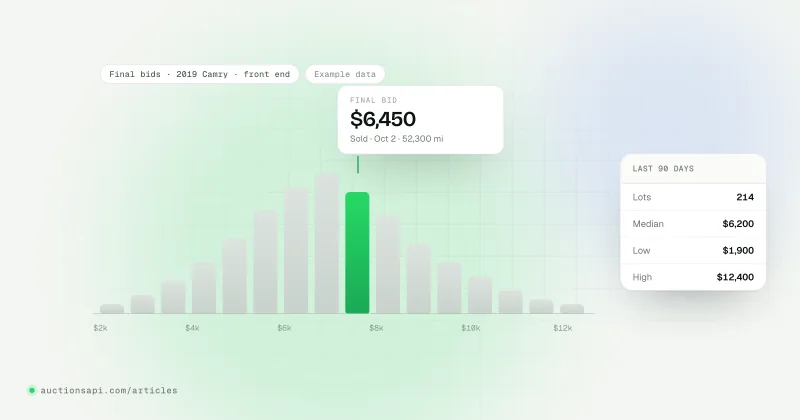 Copart & IAAI
How to find what a car sold for at Copart or IAAI
Where Copart and IAAI final bids come from, which number really means "sold for", the fees on top, and how to price a car from comparable sold lots.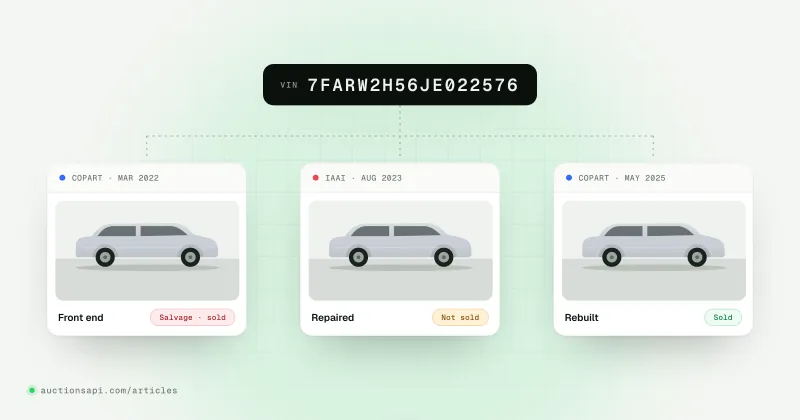 VIN & history
How to check a car's auction history by VIN
How to find every Copart and IAAI lot of a VIN, read the photos, damage, odometer and title, and spot a repaired salvage car sold as accident-free.How these guides are written and checked: editorial standards. New articles by RSS.