 English
Articles
Field notes on car auction and marketplace data: Copart and IAAI lots, sold prices, VINs, imports from the US and Korea, Chinese listings, and how to build on all of it.
 VIN & history
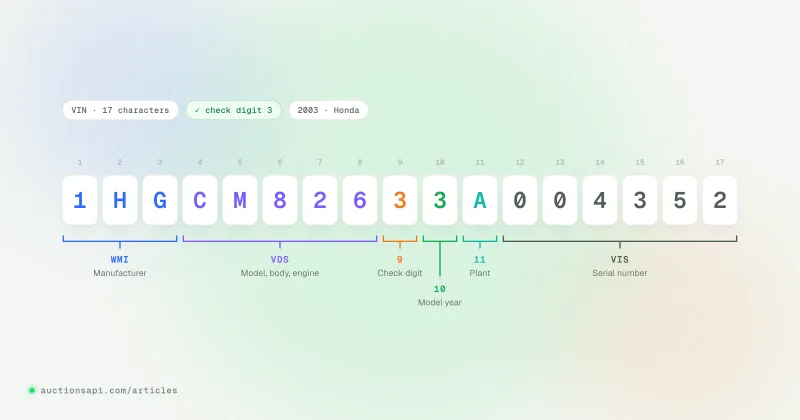
How to decode a VIN: what all 17 characters mean
What each of the 17 VIN characters means, how to calculate the check digit by hand and in code, and how to read the model year without the 30-year mix-up.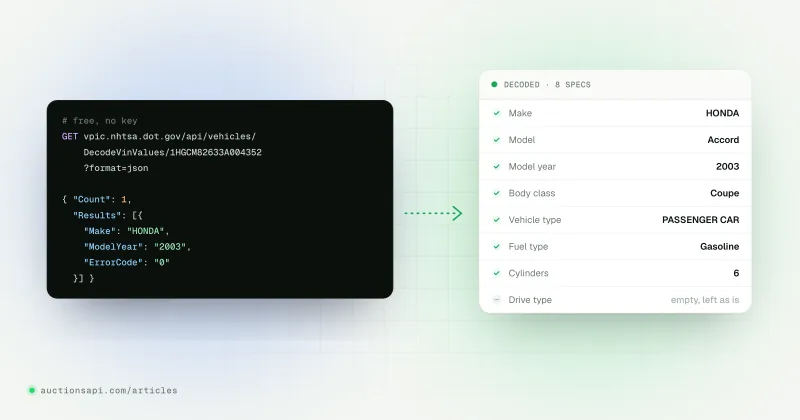 For developers
Decoding VINs with the free NHTSA vPIC API: a practical guide
The free NHTSA vPIC API in practice: which calls to use, what ErrorCode means, which fields are often empty, how to batch 50 VINs and cache the results.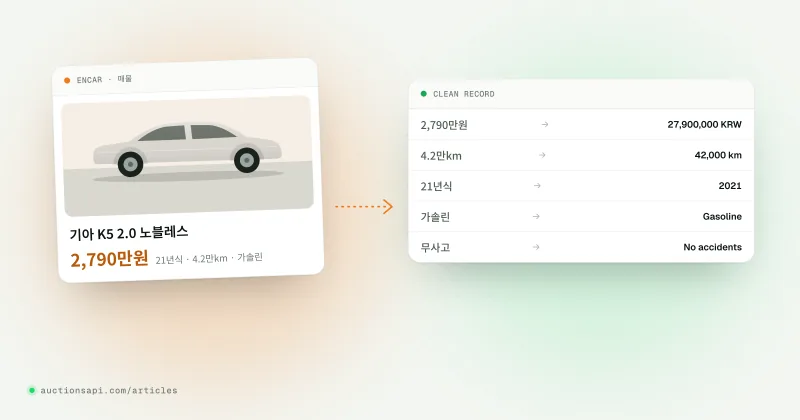 Korea & China
Encar API: Korean used-car listings in English, in one schema
There is no public Encar API. What exporters need from a listing, why 만원 prices and Korean model names break parsers, and what a clean record looks like.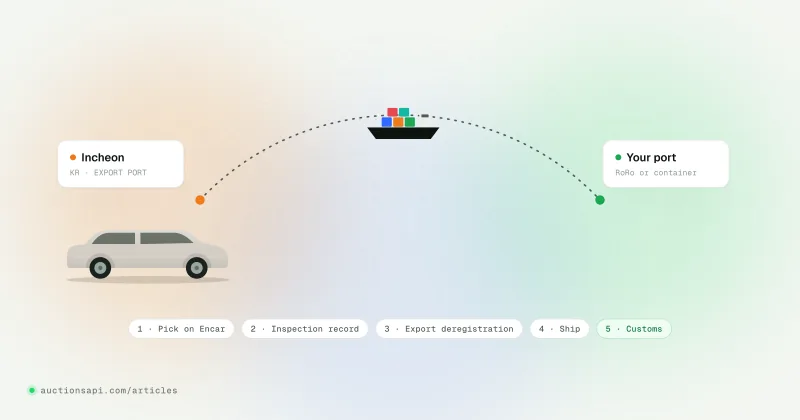 Import & export
How to import a used car from South Korea: a step-by-step guide
Choosing the car, reading its records, buying through an exporter, deregistration, RoRo or container, documents and how long each step usually takes.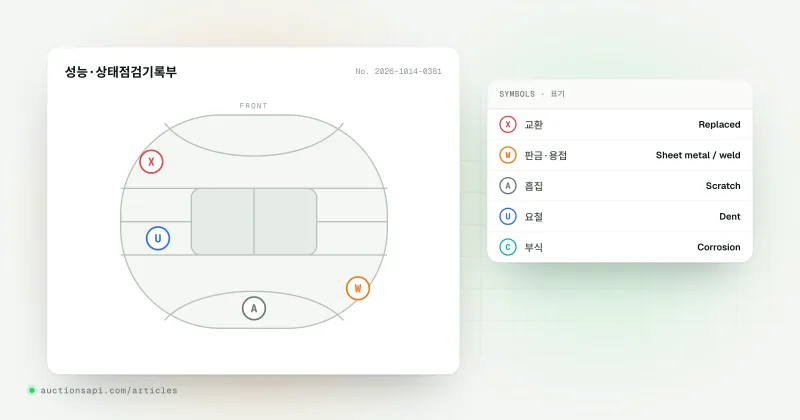 Korea & China
How to read an Encar inspection report (성능·상태점검기록부)
The Korean performance and condition record explained: panel codes, outer panels vs frame parts, what is normal, what is a red flag and how Encar diagnosis differs.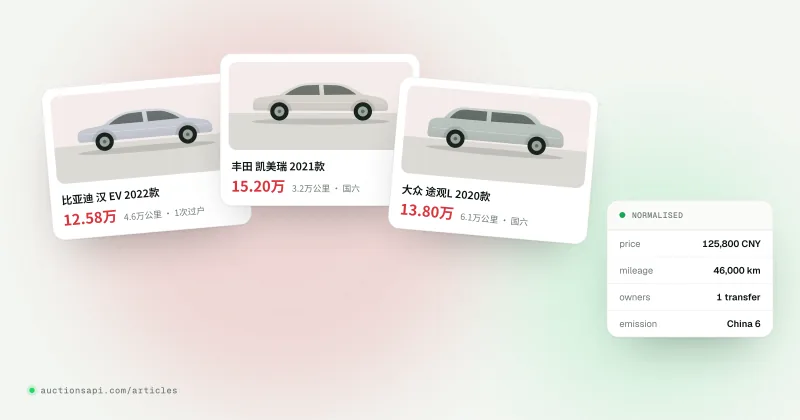 Korea & China
Che168, Dongchedi, Guazi: China's used car websites for exporters
What Che168, Dongchedi and Guazi are, how to read 万 prices, 万公里 mileage and 国六 on a listing, and how China’s used-car export works today.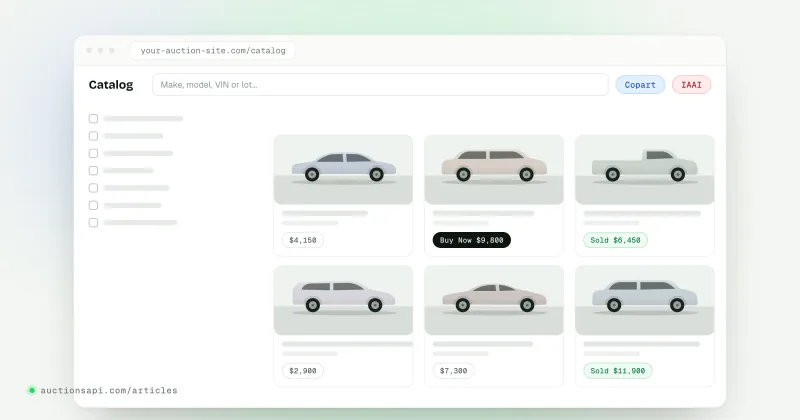 For developers
How to build a car auction website like bid.cars
What sites like bid.cars and stat.vin are made of, the architecture behind them, the parts that take longest and a phased plan to build one.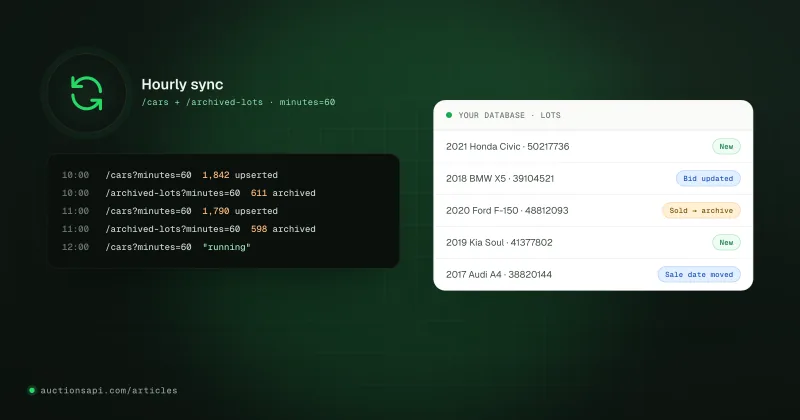 For developers
Sync car auction data: an hourly import that doesn't break
A tutorial for an hourly sync of Copart and IAAI lots: the first import, two feeds per hour, upserts by lot, archiving sold lots, retries and monitoring.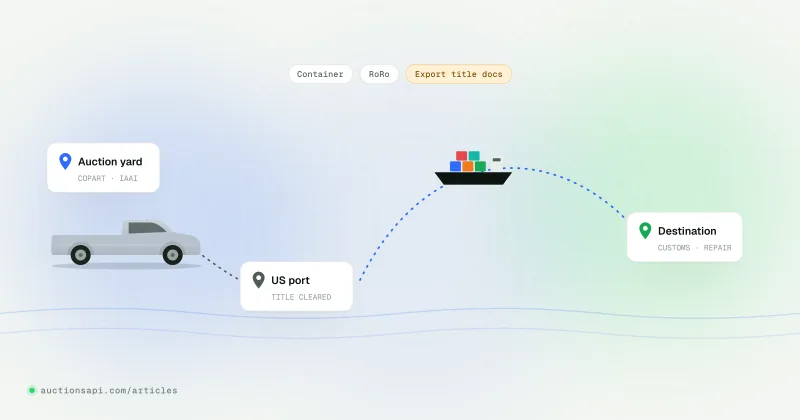 Import & export
Buying a car from a US auction and shipping it overseas: the full process
The whole route from a Copart or IAAI lot to a registered car abroad: brokers, choosing a lot, fees, the title, export clearance, shipping and customs.How these guides are written and checked: editorial standards. New articles by RSS.